

The Memory of Mists
Why My Soul Keeps Turning North

There is a rhythm to the longing I’ve felt my entire life—a steady, low hum that always points toward the British Isles. Long before I possessed a single genealogical chart, long before I understood the names Powell or Patterson, I was already living there in my mind.
I have spent years losing myself in the pages of novels and the flickering light of cinema, specifically those stories woven into the fabric of Scottish and English history. Even when those stories were purely fictional, they felt like documentary footage of a life I had once lived, or perhaps, a life I was meant to return to. People ask if I am romanticizing a land I have never touched. Perhaps. But I have come to realize that this “romanticization” is actually a kind of deep-tissue memory, an ancestral echo that refuses to be silenced by the thousands of miles between Missouri and the Highlands.
The Geography of the Heart
It is a strange, quiet grief to feel homesick for a place you have never been. My DNA tells a story of varied landscapes—there is German blood in my history, certainly—but it does not sing. It does not pull. It does not haunt my dreams the way the Highlands or the rolling hills of the Celtic fringes do. My heart has a specific frequency, and it only vibrates when it hears the call of the North.
As an Ulster Scot, that pull feels even more layered. It is the history of migration, of resilience, and of a people who were shaped by both the rugged beauty of the Scottish hills and the hard-won survival of the Irish landscape. This isn’t just about heritage; it’s about the internal landscape of my own spirit. When I see those landscapes, I don’t just see a place I want to visit. I see the place where the people who made me learned how to survive, how to dream, and how to eventually cross an ocean to start again.
The Dream of the Highland Cottage
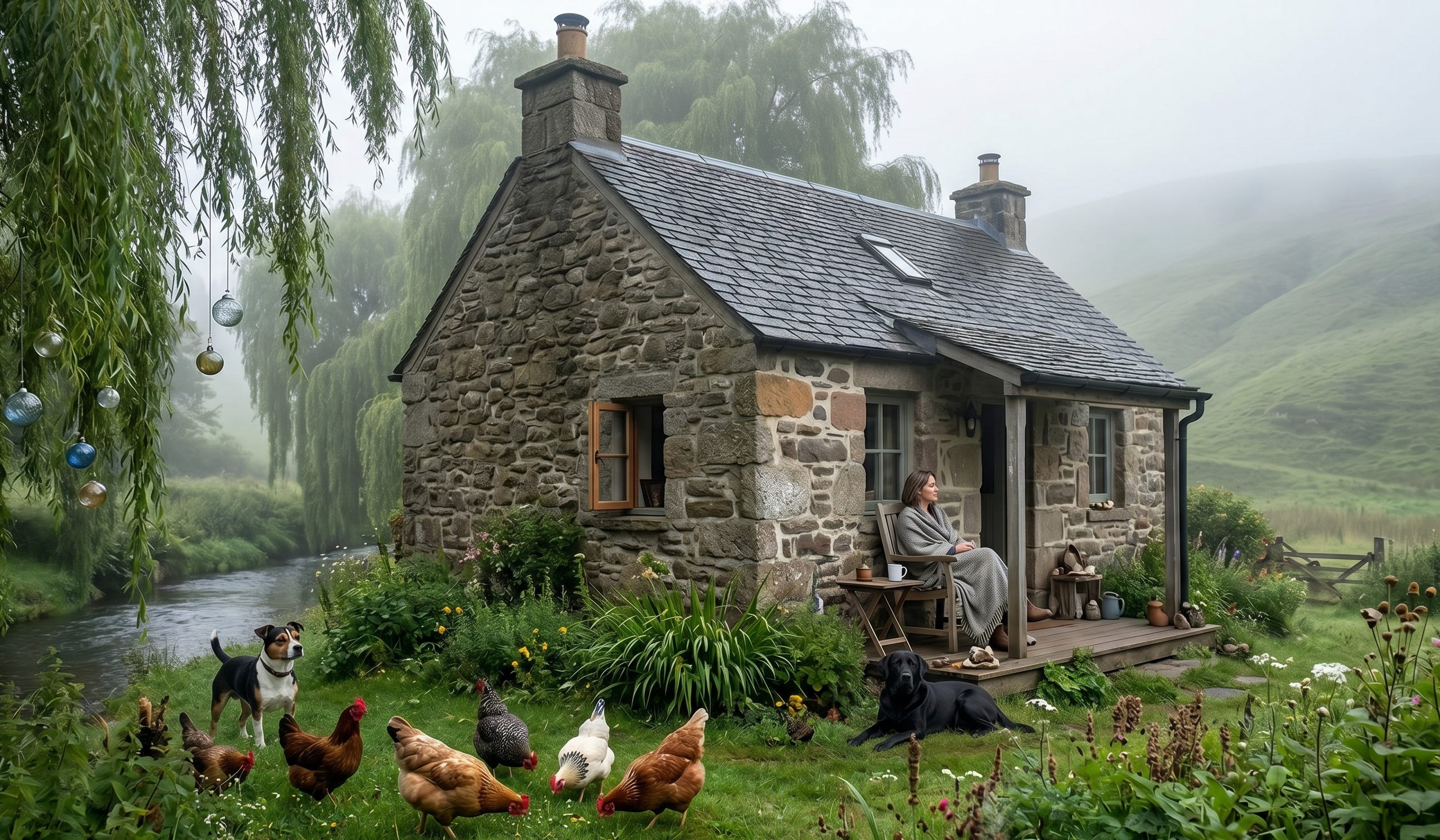
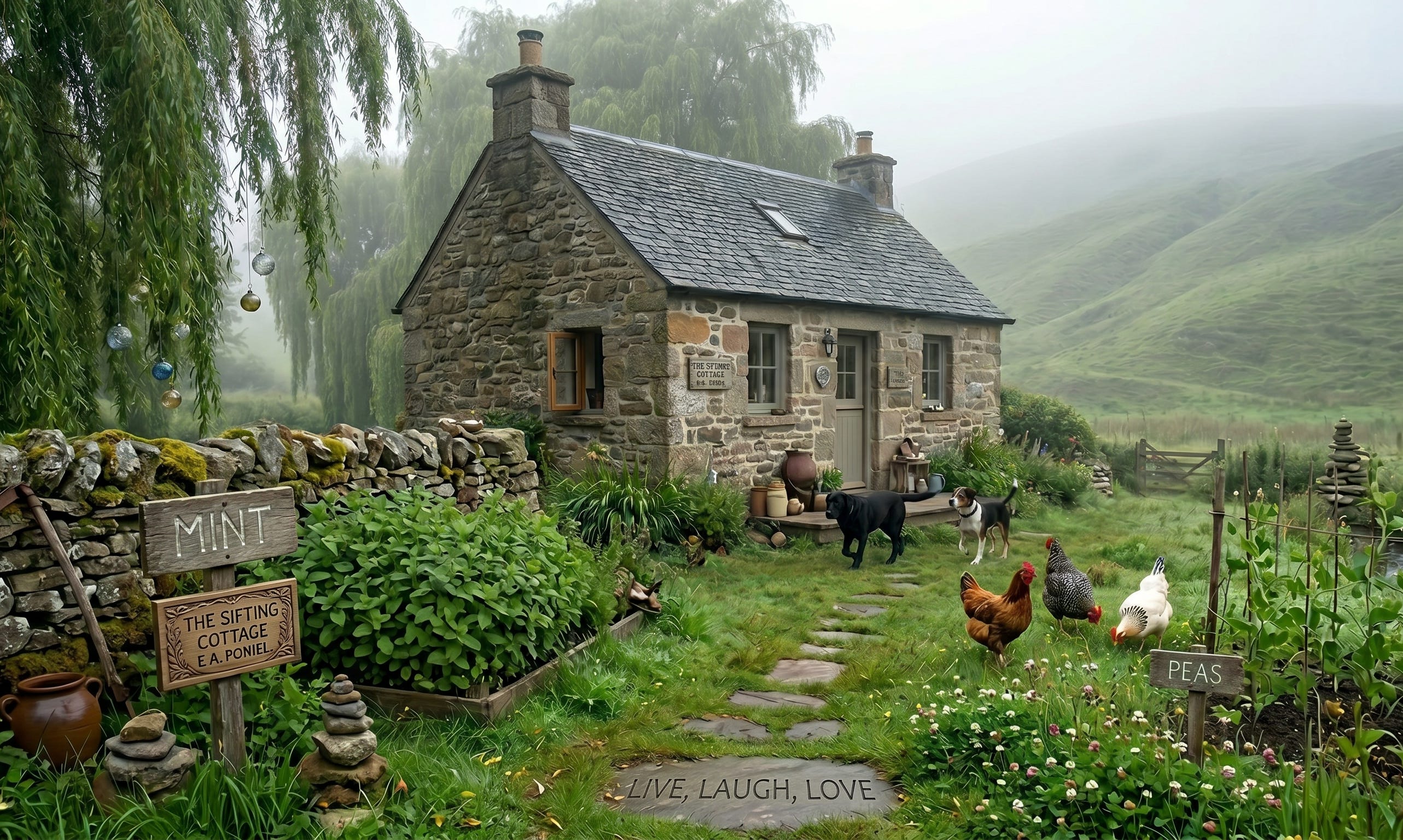
My vision for this homecoming is vivid, almost tactile. I dream of a life that is slow, intentional, and deeply rooted in the earth. I imagine a small, weathered stone cottage tucked into the quiet countryside of the Highlands. It would be draped in history, with thick walls that have heard centuries of rain and wind.
In this dream, there are willow trees bowing over a small, winding stream. I picture the branches swaying in the soft breeze, holding glass ornaments that catch the pale, northern light, casting tiny rainbows across the dew-kissed grass. My garden would be a wild, untamed thing, full of herbs and native flowers that hum with the wings of bees. I can almost hear the soft, rhythmic clucking of chickens pecking at the ground in the morning, their presence a grounding reminder of the simplicity of life.
I see myself sitting on a porch as the morning mist—that thick, silver Highland fog—clings to the hillsides. The air is cool and smells of wet stone and peat smoke. There is no urgency here. I am simply listening. Sometimes it’s the haunting, melodic swell of traditional Scottish music playing softly from an open window; other times, it is just the profound, ringing silence of the countryside, broken only by the sharp, sweet chirp of birds announcing the new day.
Bridging the Romantic and the Real
In my research, I spend a lot of time “sifting through the soil”—getting the facts straight, correcting the misspellings of names, and ensuring the record reflects the truth of who our ancestors were. That is the work of an historian. But the work of a human is to hold space for that intangible call.
We are taught to value only what we can verify—dates, migration patterns, and probate records. And I am a dedicated researcher; I value those truths. But there is a truth far older than ink on a page. There is an ancestral inheritance that lives in our marrow. It is the reason why a specific landscape can feel familiar to a stranger. It is the reason why a story about history—even a fictional one—can move us to tears.
We are recognizing the soil that nurtured our forebears. We are remembering, through them, the way the air tasted, the way the light fell across the heather, and the quiet dignity of a life lived close to the earth. When I look at the Patterson and Powell lines, I see the threads of a narrative that is still being written. I am simply the latest chapter.
The Quiet Power of Ancestral Memory
I’ve often wondered why this pull is so much stronger than the interest in other parts of my ancestry. Perhaps it’s because the culture of the Highlands and the Irish countryside speaks to a part of me that craves silence and connection. In our modern, hurried world, the dream of a cottage with chickens and a garden isn’t just a fantasy; it’s a form of resistance. It is a yearning to return to a way of life where we are not just consumers of time, but participants in the cycles of the seasons.
The trinkets I imagine hanging from the trees, the soft music, the morning coffee while the birds sing—these aren’t just aesthetic choices. They are symbols of a life I am building toward. They are the markers of a soul that has finally stopped running and started resting.
The Promise
I pray for the day my internal compass finally reaches its destination. I want to stand on that ground—not as a tourist, but as a daughter of that land who has finally found her way back. I want to close the distance between the stories I’ve read and the reality of the earth beneath my feet.
I know it will be overwhelming. It will be the meeting of my mind, which has spent a lifetime studying history, and my heart, which has spent a lifetime waiting to go home. Until then, I will keep researching. I will keep writing about the Powells and the Pattersons. I will keep collecting stories and artifacts, turning my home here into a small sanctuary that honors the journey of those who came before me.
I will keep listening for the call of the mist, waiting for the day I can finally say: I am here. And when that day comes, I will know that the journey—all the research, the longing, the fictional stories that sustained me, and the deep, abiding love for a place I hadn’t yet touched—was exactly what I needed to become who I am today.